For years, the story of technology was about moving everything to the cloud. Bigger data centers, more centralized power, and a constant stream of information flowing back and forth between your device and a server hundreds or thousands of miles away. That story is changing fast. In 2026, the smarter move isn’t always sending data further away, it’s keeping it close. This is the core idea behind edge computing, and it’s quietly reshaping how modern technology actually works.
If you’ve noticed your phone unlocking instantly with face recognition, your car reacting to a hazard before you do, or a factory machine flagging a problem before it breaks down, you’ve already experienced edge computing in action. It’s not a future concept anymore. It’s running underneath the tools we use every day.
What Edge Computing Actually Means Today
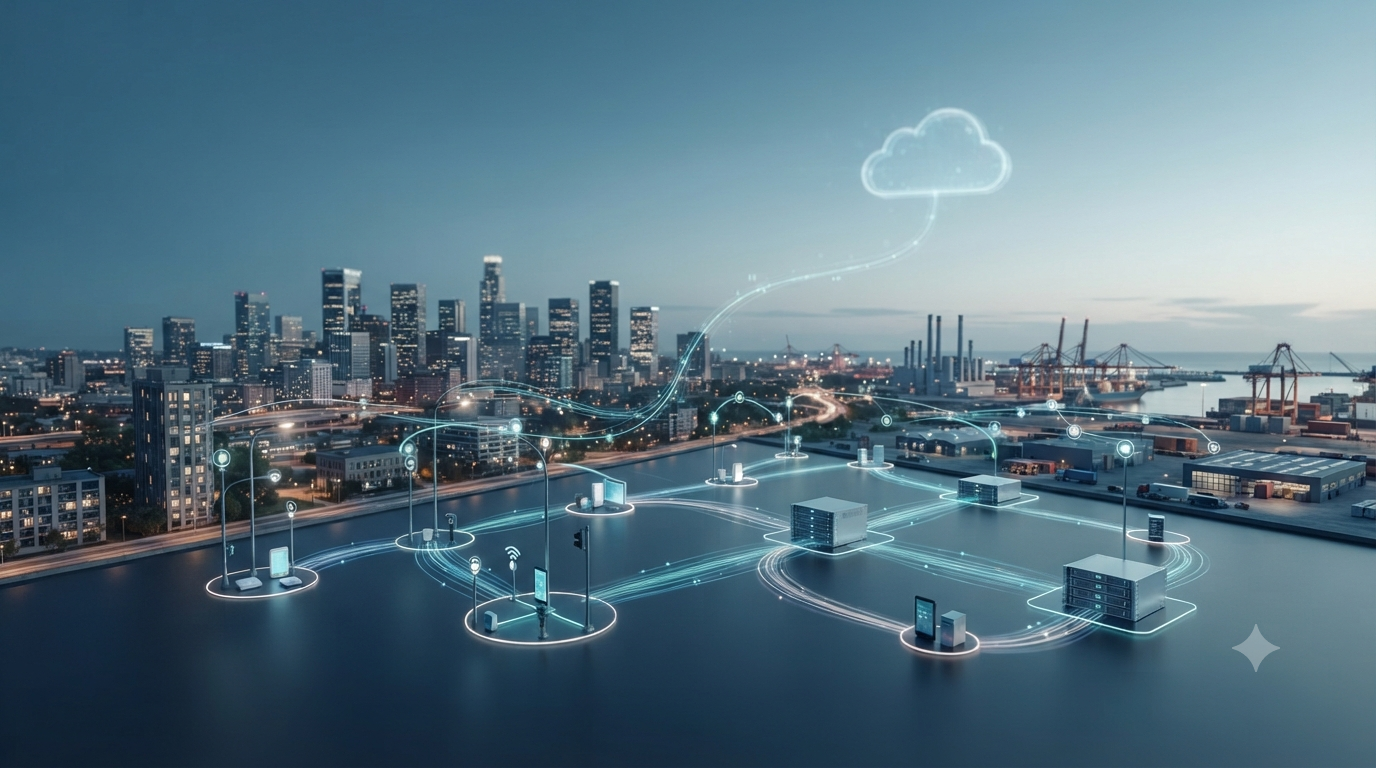
Edge computing simply means processing data near the place it’s created, instead of shipping it off to a distant server first. A security camera analyzing footage on-site, a wearable device tracking your heart rate without pinging the cloud every second, a delivery drone adjusting its path mid-flight, these are all edge systems doing the thinking locally.
This matters because speed and reliability are everything in modern applications. A self-driving car can’t afford to wait a few hundred milliseconds for a cloud server to confirm there’s a pedestrian ahead. A hospital monitoring system can’t lag behind a patient’s vital signs. Edge computing removes that delay by putting the decision-making power right where the action happens.
Why the Shift Is Happening Right Now
Three forces are pushing edge computing from a niche idea into mainstream infrastructure this year.
The first is the sheer number of connected devices. Sensors, cameras, wearables, industrial machines, and smart appliances are multiplying so quickly that sending every byte of data to a central cloud would overwhelm even the strongest networks. It simply isn’t efficient anymore.
The second is artificial intelligence. AI models used to require massive cloud servers to run. That’s no longer strictly true. Smaller, optimized models can now run directly on local chips, phones, cameras, and industrial controllers. This means AI-powered decisions, like spotting a defect on a production line or recognizing a voice command, happen instantly, without needing a round trip to a data center.
The third is the rollout of faster, more reliable wireless networks. Advanced mobile connectivity is giving edge devices the bandwidth they need to communicate with each other and with nearby edge servers almost instantly. Together, these three trends are turning edge computing from an experiment into a requirement.
Where Edge Computing Is Making the Biggest Impact
Manufacturing and Industrial Operations
Factories were early adopters of edge computing, and it’s easy to see why. Machines equipped with sensors can now detect vibration patterns, temperature shifts, or unusual sounds that signal a part is about to fail. Instead of waiting for a scheduled inspection, the system flags it immediately, often preventing costly downtime. This kind of predictive maintenance is becoming standard practice rather than a luxury feature.
Healthcare
Hospitals and clinics are using edge devices to monitor patients continuously without overwhelming their networks with constant data transfers. Wearable monitors can process vital information locally and only send meaningful alerts when something needs attention. This also helps protect sensitive patient data, since less of it needs to travel outside secure local systems.
Retail and Smart Cities
Walk into a modern retail store and there’s a good chance edge computing is working behind the scenes, from smart shelves that track inventory in real time to checkout systems that reduce wait times. Cities are applying the same logic at a larger scale, using edge-powered traffic systems, smart lighting, and public safety cameras that process footage locally instead of streaming it constantly to a central server.
Autonomous Vehicles and Robotics
Self-driving cars, delivery robots, and drones depend entirely on split-second decisions. There’s no room for the delay that comes with sending sensor data to the cloud and waiting for a response. Edge computing lets these machines sense, think, and react in real time, which is exactly why the technology has become non-negotiable for anyone building autonomous systems.
AI at the Edge Is the Real Turning Point
If there’s one trend defining this shift right now, it’s the marriage of AI and edge computing. Instead of relying purely on massive cloud-based models, companies are building smaller, purpose-built AI systems that run directly on local hardware. This means faster responses, lower costs, and better privacy, since raw data doesn’t need to leave the device it was collected on.
This doesn’t mean the cloud is disappearing. Far from it. Large-scale AI training still happens in massive data centers because that requires enormous computing power. What’s changing is the balance. The cloud trains the models, and the edge runs them where the action actually happens. It’s a partnership, not a replacement.
Why Businesses Are Paying Attention
Beyond the technical benefits, there’s a strong business case for edge computing. Processing data locally reduces the amount of bandwidth a company needs, which lowers costs over time. It also helps with privacy and regulatory compliance, since sensitive information can stay within a specific region or facility instead of crossing borders through cloud servers. For industries like healthcare, finance, and government, this is becoming less of a nice-to-have and more of a requirement.
Reliability is another major draw. If an internet connection drops, edge systems can often keep functioning locally instead of grinding to a halt. That kind of resilience matters a great deal for industries operating in remote locations or mission-critical environments.
The Challenges That Still Exist
None of this comes without hurdles. Managing thousands of edge devices spread across different locations is far more complex than managing a single centralized server. Security is also a growing concern, since every connected device at the edge is a potential entry point for attackers. Companies are now investing heavily in securing hardware itself, not just the networks connecting it.
Looking Ahead
Edge computing isn’t a passing trend, it’s becoming the backbone of how modern technology operates. As AI grows smarter and more compact, and as connected devices continue to multiply, the edge will only become more central to how businesses and everyday users interact with technology.
The takeaway is simple. The future of computing isn’t just about bigger clouds, it’s about smarter distribution. Processing power is moving closer to where life actually happens, and that shift is quietly transforming everything from the phone in your pocket to the factory floor and the city streets around you.