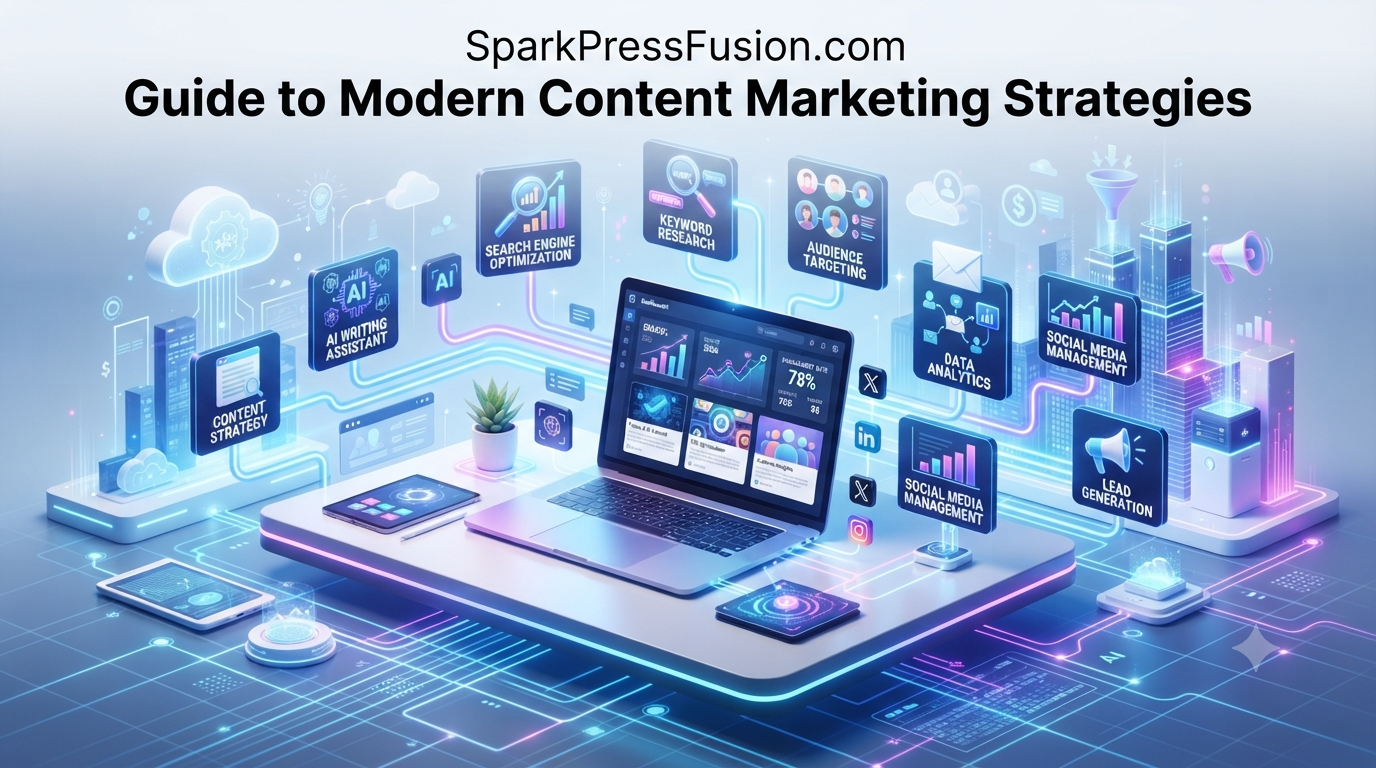
In the rapidly evolving digital landscape, businesses must adapt their marketing strategies to remain competitive. The SparkPressFusion.com Guide to Modern Content Marketing Strategies offers a comprehensive approach to navigating these changes, focusing on innovative techniques and tools that enhance audience engagement and drive business growth. Whether you’re a seasoned marketer or a small business owner, this guide provides the insights you need to refine your content marketing approach for 2023 and beyond.
Understanding Content Marketing Trends
Staying abreast of content marketing trends is crucial for any successful strategy. In 2023, several trends are shaping the industry, from the integration of artificial intelligence to the rise of video content and interactive elements.
Current Trends in 2023
- AI in Content Marketing: AI tools are revolutionizing how content is created and distributed, enabling marketers to personalize content and automate repetitive tasks.
- Video Content Strategies: Video continues to dominate, with platforms like TikTok and YouTube becoming essential for brand visibility.
- Interactive Content: Quizzes, polls, and other interactive elements are increasingly used to engage audiences actively.
- Sustainability in Marketing: Consumers are more eco-conscious, and brands are responding by incorporating sustainability into their content strategies.
Developing a Content Marketing Strategy
Creating an effective content marketing strategy requires a deep understanding of your audience and clear, measurable goals.
Identifying and Understanding Your Audience
Successful content marketing begins with knowing who your audience is. Use analytics tools to gather data on your audience’s demographics, interests, and online behavior. This information will help tailor your content to meet their needs and preferences.
Setting Clear Goals and KPIs
Define what success looks like for your content marketing efforts. Establish Key Performance Indicators (KPIs) such as engagement rates, conversion metrics, and brand awareness levels to track progress and adapt strategies as needed.
Choosing the Right Platforms
Select platforms that align with your audience’s preferences. Whether it’s social media, email campaigns, or search engine optimization (SEO), each platform has unique strengths that can enhance your content’s reach and impact.
Content Creation and Distribution
The creation and distribution of content are the heart of any marketing strategy. Ensuring that your content resonates with your audience and reaches them on the right channels is essential.
Types of Content to Consider
- Blogging: A staple of content marketing, blogs can drive traffic and establish authority in your industry.
- Video Marketing: Engaging and easily digestible, videos can capture attention and convey complex information succinctly.
- Content Curation: Sharing relevant content from other sources can enhance your credibility and fill content gaps.
Leveraging Distribution Channels
Maximize your content’s reach by utilizing a variety of distribution channels. This may include social media marketing, influencer partnerships, and email newsletters. Consistent and strategic distribution ensures your content reaches its intended audience.
Measuring Success and ROI
To understand the effectiveness of your content marketing efforts, you must measure success and calculate return on investment (ROI).
Tools for Analytics and Reporting
Utilize analytics tools like Google Analytics and social media insights to track performance. These tools provide detailed reports on engagement, traffic sources, and user behavior.
Adjusting Strategies Based on Data
Data-driven insights are invaluable. Regularly review your analytics to identify what works and what doesn’t, making adjustments to optimize your strategy continuously.
Case Studies and Examples
Success Stories in Various Industries
Consider the example of a small business that leveraged social media videos to increase brand awareness by 50%. By understanding platform-specific trends and audience preferences, they tailored their content for maximum impact.
Future of Content Marketing
Emerging Technologies and Trends
The future of content marketing will be shaped by advancements in technology and shifts in consumer behavior. AI, augmented reality (AR), and virtual reality (VR) are poised to redefine how brands engage with their audiences.
Conclusion and Next Steps
Implementing a modern content marketing strategy requires a blend of creativity, data analysis, and adaptability. By leveraging the latest trends and technologies, businesses can create compelling content that resonates with their audience and achieves measurable results. Start by evaluating your current strategy, setting clear goals, and embracing new tools and platforms to enhance your marketing efforts.
FAQ
- What are the key components of a modern content marketing strategy?
Key components include understanding your audience, setting clear goals, choosing the right platforms, and measuring success through analytics. - How can small businesses implement cost-effective content marketing strategies?
Small businesses can focus on organic social media, blogging, and user-generated content to engage audiences without high costs. - What tools are recommended for modern content marketing?
Tools like Google Analytics, HubSpot, and Canva are invaluable for analytics, CRM, and content creation respectively. - How do modern content marketing strategies differ from traditional ones?
Modern strategies are more data-driven, personalized, and often leverage new technologies like AI and machine learning to optimize efforts.
For more insights and a deeper dive into crafting a successful content marketing strategy, explore the resources available at SparkPressFusion.com. Engage with our community to share experiences and learn from industry experts.