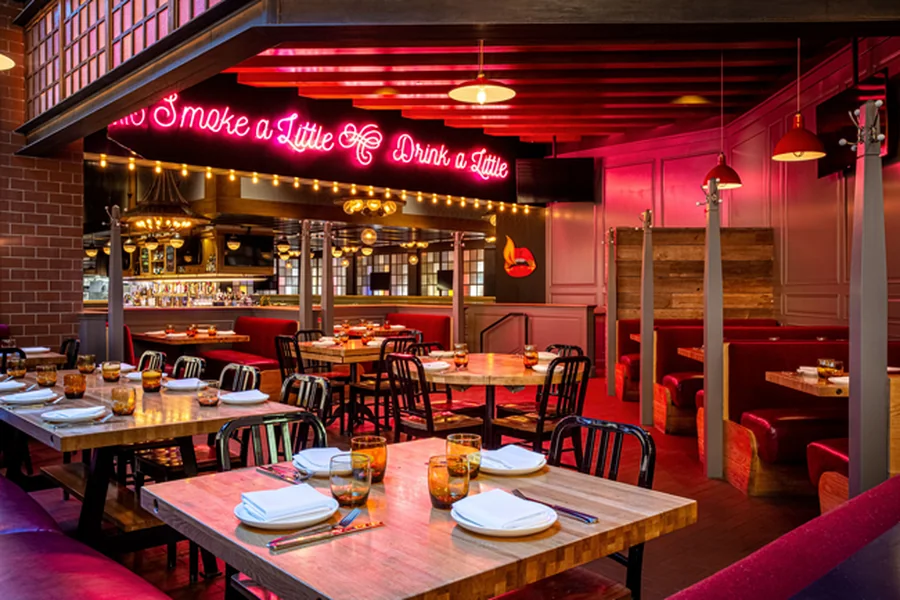
Sunlight enters the empty dining room ahead of the camera crew. It falls across a chair and brings out the grain of a tabletop, giving the room some character before filming begins. Keep those details in the shot list. They help viewers picture arriving for a meal and settling into a seat, even before the kitchen’s food appears on screen.
A catalog such as RestaurantFurniture.net can help a production team name the furniture details it wants to show before building a shot list. That reference work should lead back to the actual restaurant. Film the pieces guests will use, in the positions where service happens, and connect their appearance to an ordinary moment at the table. The result should feel like an invitation into a real place.
Begin with a guest’s arrival
First, decide whose visit the video will follow. A lone diner sees a counter differently from a group looking for somewhere to celebrate. The furniture can show those choices without a narrator listing every seat. Begin with a wider view of the entrance and dining room, then move closer as a guest approaches a seat.
Give the arrival sequence enough room to make sense. Cutting from a street sign to a close upholstery shot may look polished, but it tells viewers little about the surrounding space. Keep a clear sequence of approach, seating, and service. That order is an editorial choice, not a promise that every guest will follow the same path.
Find out which questions guests regularly ask the host. The answers may identify a missing shot faster than another reference reel. If visitors often ask whether the counter serves full meals, include a meal being served there.
Show what the furniture lets people do
A tabletop deserves screen time when something happens around it. Guests make space for a shared plate. A server sets down a dish without moving every glass. Friends sit in a booth and turn toward each other. These moments reveal scale and use in ways that an isolated beauty shot cannot.
The potential audience is broad. Pew Research Center’s 2025 survey found that 84% of U.S. adults have ever used YouTube. Its audience research establishes the platform’s reach, although it says nothing about how a particular restaurant film will perform. The practical lesson is to make the scene understandable to someone who has never heard of the restaurant.
Avoid acting out a level of service that the team cannot repeat. A furniture arrangement created only for filming can make the room appear generous in a way that the live setup will not. Use a normal service arrangement and let the crew work around it.
Let close views explain the wider scene
Close shots work best once the audience understands the room. Reveal the edge of a table as a plate arrives, or the back of a chair as a diner sits down. Those details can reinforce the restaurant’s visual identity without making the film feel like a product catalog.
Before filming, decide which details have a purpose:
- A texture that reflects the restaurant’s atmosphere.
- A seating choice that explains how the room is used.
- A service moment that shows the furniture in context.
Sound needs an equally deliberate plan. If a staff member explains why the counter was arranged a certain way, that explanation should remain available when viewers cannot hear it. W3C’s captioning guidance is a useful reference for representing speech and meaningful audio in prerecorded video. Check the captions manually, particularly product terms and the restaurant’s name.
Silent close-ups need some restraint too. Too many quick cuts can make ordinary materials hard to recognize. Hold the shot long enough for the viewer to notice the detail and understand its place in the room.
The same principle applies when animated labels or transitions accompany the footage. This discussion of visual storytelling considers how pacing and clear explanations help an audience follow a sequence. For a restaurant film, use an overlay to identify a space or explain a service choice, then give viewers time to look at the actual room.
Keep the room recognizable
Furniture can look different under filming lights. A warm finish may appear orange, while dark upholstery can lose its visible texture. Compare test footage with the real room before recording the full sequence. Aim for an appealing image that a visitor will still recognize on arrival.
The same care applies to claims. A line about “the most comfortable seats in town” introduces a comparison that attractive footage cannot establish. Describe what can be shown instead, such as a supported seat at a chef’s counter or a booth arrangement intended for shared meals. The Federal Trade Commission’s guidance on truthful advertising provides a useful boundary between persuasive presentation and unsupported promises.
Watch for less obvious mismatches during editing. A shot of the private dining area should not imply that every booking receives that space. If the film combines different rooms, transitions or plain captions can help viewers understand their choices.
Give the service team a review
Show the final edit to the people who run the room before signing it off. Ask the host whether the arrival sequence is accurate. Have a server review the route dishes take to the table. The manager should confirm that the furniture belongs to the current setup, especially if filming took place during a renovation.
Invite specific corrections. “Does this feel right?” may produce polite agreement. “Would a guest expect this seat after seeing this scene?” is more useful. A small change to the film can prevent an expectation that the booking team must explain away later.
Keep a note of scenes that furniture changes could make outdated. Moving a chair need not trigger a new film, but a major counter alteration or a new private room may change what the footage communicates. Save the source footage and record who can approve an updated version.
A room worth recognizing
The best furniture footage shows something recognizable about life in the restaurant. It might feature the quiet seat beside a window or a table where shared dishes arrive together. Each image gives guests a better sense of the place without expecting a material or chair style to explain the entire brand.
During the final review, watch as someone planning a meal. Can you tell where you might sit, how the room feels, and what the furniture contributes to that experience? Keep the scenes that answer those questions. Those details can help an invitation on screen become a visit to the dining room.